Top 5 Lower Chest Exercises With Dumbbells
Contents
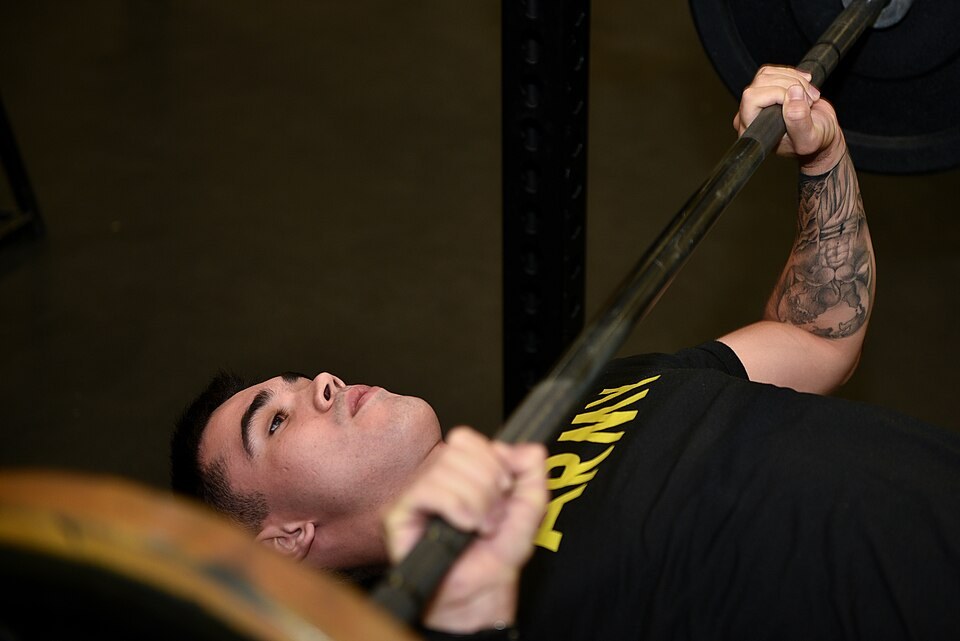
Photo by U.S. Army 173IBCT-A by Staff Sgt. Alexander Henninger, Public domain, via Wikimedia Commons
Top 5 Lower Chest Exercises With Dumbbells
If you want to develop your lower chest muscles, you need exercises that train the pectoral muscles, or pecs. These muscles shape the look of your chest.
They also move your arms, pulling them across the body (adduction) and rotating them inward. The pecs include two muscles: the pectoralis major and the pectoralis minor.
The pectoralis major is the large, fan-shaped muscle that runs from the collarbone and breastbone out to the upper arm. Its lower fibers form the "lower chest." The pectoralis minor is a smaller muscle that lies underneath it and mainly moves the shoulder blade.
You can't fully isolate one part of a muscle, but some angles put more work on the lower fibers. Pressing or pushing with your arms moving down and in from the body, as in decline presses and dips, shifts more of the work to the lower chest.
This article describes five exercises that build strength and definition in the lower chest.
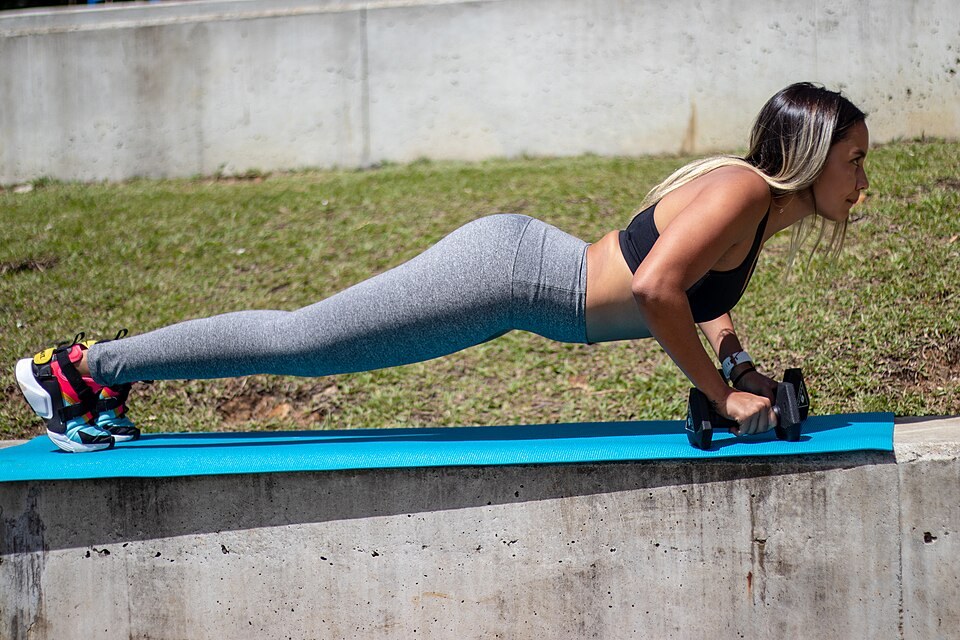
Incline pushup
Pushups are a classic upper-body exercise. Doing them with your hands raised on a bench puts more emphasis on the lower chest and makes the move easier for beginners.
What you need: a sturdy flat bench or step platform.
Steps:
- Stand in front of the bench and place your hands on its edge, slightly wider than shoulder-width apart.
- Walk your feet back until your body forms a straight line from head to heels. Rest your weight on the balls of your feet.
- Slowly bend your arms to lower your chest toward the bench, keeping your elbows fairly close to your body.
- Push back up until your arms are straight but not locked.
- Repeat 10 to 12 times for one set.
Cable crossover
On a cable machine, the height of the pulleys changes which part of the chest works hardest. Setting the pulleys high, so you pull down and across, targets the lower chest. Setting them low targets the upper chest.
What you need: a cable machine.
Steps:
- Set both pulleys above head height. Attach a handle to each and select a light to moderate weight.
- Stand in the middle of the machine and take a handle in each hand, palms facing down. Step forward to put tension on the cables.
- Step one foot forward and lean slightly forward from the hips.
- Keep a slight bend in your elbows, with your arms out to the sides.
- As you breathe out, pull the handles down and together in front of your hips.
- As you breathe in, slowly let your arms return to the start.
- Repeat 10 to 12 times per set.
Chest Parallel bar dips
Parallel bar dips work the chest, shoulders, and triceps. Leaning your torso forward during the dip shifts more of the work to the lower chest.
What you need: a pair of parallel bars.
Steps:
- Grip the bars and press yourself up until your arms are straight.
- As you breathe in, bend your elbows and lean your torso forward. Lower yourself until you feel a mild stretch in the chest, usually with your upper arms about parallel to the floor.
- As you breathe out, press back up to the start.
- Do as many controlled reps as you can with good form, and stop before your form breaks down.
Dips require good upper-body strength and can strain the shoulders if you go too deep. If you can't do a full dip yet, use an assisted dip machine or a resistance band.
Decline dumbbell bench press
This press targets the lower chest along with the shoulders and triceps. You can use a barbell instead, which lets you lift heavier loads, but dumbbells allow a freer range of motion and work each side on its own.
What you need: two dumbbells and a decline bench.
Steps:
- Set the bench to a slight decline and secure your legs under the pads.
- Lie back with a dumbbell in each hand, resting them on your thighs.
- Bring the dumbbells up to the sides of your chest, then press them straight up over your chest, palms facing your feet.
- Lower the dumbbells slowly until your elbows are bent about 90 degrees and the weights are beside your lower chest.
- As you breathe out, press the dumbbells back up. Pause for 1 to 2 seconds at the top.
- Do 10 to 12 reps for one set. Rest between sets.
Flat pressing works the lower chest well too. In one electromyography study of bench angles, the lower part of the pectoralis major was most active with the bench flat, compared with inclines of 15 to 60 degrees.
Decline dumbbell bench press with rotation
This is a variation of the exercise above that adds a twist of the wrists.
What you need: a decline bench and two dumbbells.
Steps:
- Lie on the decline bench with a dumbbell in each hand, resting them on your thighs, palms facing each other.
- Bring the dumbbells to the sides of your chest, keeping your palms facing each other.
- As you breathe out, press the dumbbells up while rotating your palms to face your feet at the top.
- Squeeze your chest and hold for 1 to 2 seconds.
- Lower the dumbbells slowly while rotating your palms back to face each other.
- Do 8 to 12 reps per set. Rest between sets.
The bottom line
A well-developed lower chest gives the chest a fuller, more defined look. These exercises help train the lower fibers of the pectoralis major, but they work best as part of a full chest and upper-body routine.
Strong pecs also help you push, lift, and move your arms in everyday life and sports. Federal guidelines advise adults to do muscle-strengthening activity at least 2 days a week.
Use good technique, start with a manageable weight, and add load gradually. Give your chest muscles a day or two to recover between hard sessions to lower your risk of injury.
Sources
- Effect of Five Bench Inclinations on the Electromyographic Activity of the Pectoralis Major, Anterior Deltoid, and Triceps Brachii during the Bench Press Exercise, International Journal of Environmental Research and Public Health (PubMed)
- Top 10 Things to Know About the Second Edition of the Physical Activity Guidelines for Americans, U.S. Department of Health and Human Services