How Does a Food Pyramid Help Individuals Eat a Healthy Diet?
Contents
How Does a Food Pyramid Help Individuals Eat a Healthy Diet?
Eating a healthy diet is one of the most important things you can do for your physical and mental health. Your body needs carbohydrates, proteins, fats, vitamins, minerals, water and dietary fiber.
People struggle to eat healthily for many reasons: busy schedules, competing priorities, the cost of healthy food and the effort of changing old habits.
Healthy eating works best as an everyday lifestyle. Knowing what to eat and how much, and making it a daily habit, can be a challenge.
A food pyramid acts as a simple guide, with options to choose from based on your food and drink preferences.
Healthy diet
A healthy diet meets your body's nutritional needs. No single food provides every nutrient an adult needs, so a healthy diet includes a variety of foods.
Eating healthily also means balancing the calories you eat with the calories you burn. Calories you eat but don't use are stored as fat, which over time leads to weight gain.
Most people fail at healthy eating because:
- We don't give our taste buds enough time to change. Switching from red meat to healthier proteins, or using less salt, takes time. Cravings for healthier food usually come if you are patient.
- Lack of planning. A new way of eating takes some research and preparation. Without a plan or a guide, it's easy to slip back.
- Expecting results too fast. Losing or gaining weight takes time when you do it the right way. Many people give up and go back to old habits after just a few days.
What is a food pyramid?
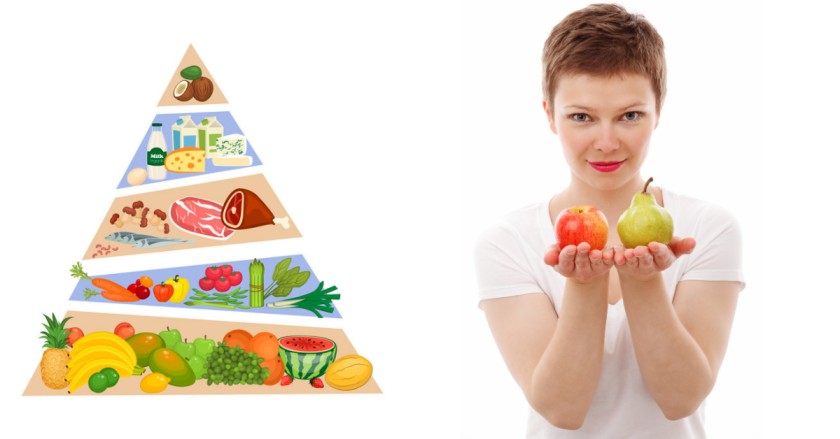
A food pyramid is a visual guide to how much to eat from each basic food group. The wide base shows foods to eat most, and the narrow top shows foods to eat least.
The idea became popular in Europe in the 1970s. In the United States, the USDA released its Food Guide Pyramid in 1992, its first guide with recommended servings for each food group.
The USDA turned it into MyPyramid in 2005, then replaced the pyramid with MyPlate in 2011, a plate divided into food groups. Canada never used a pyramid; its first guide, Canada's Official Food Rules, came out in 1942 during wartime rationing.
A food pyramid is made of layers for the main food groups. It shows what to eat and roughly how much, to help you build a balanced diet.
How does the food pyramid help individuals eat healthily?
- It shows which foods to eat most and least, and roughly how much.
- It encourages variety by including every major food group.
- It makes meal planning simpler, helping you get enough vitamins, minerals and fiber without overdoing calories.
The food pyramid layers
- The base. Traditional pyramids put starchy foods that give energy, like cereals, potatoes, bread and rice, at the base. Newer guides, like the Harvard Healthy Eating Pyramid, stress choosing whole grains over refined ones and put vegetables and fruits at the base.
- The second layer. This layer holds fruits and vegetables. They are rich in vitamins, minerals and fiber. Eating plenty of them is linked to a lower risk of heart disease, stroke, high blood pressure and some cancers.
- The third layer. This one contains dairy foods like milk, yogurt and cheese, or alternatives like fortified soy milk. Dairy provides calcium, which is essential for strong bones and teeth, nerve signals and muscle movement.
- The fourth layer contains proteins like fish, meat, poultry, eggs, beans and nuts. Protein is part of every cell, from muscles and organs to skin and hair. It helps build and repair tissue, carry oxygen in the blood and make antibodies that fight infection.
- The top layer. This small layer holds fats, oils and sweets. Healthy fats, like olive oil and nuts, help store energy, absorb vitamins and support cell growth. Limit butter, sweets and sugary drinks.
Water isn't part of every food pyramid, but it is just as important. Water makes up about 60% of an adult's body weight. It helps:
- prevent constipation
- lubricate joints
- regulate body temperature
- support performance during exercise
- protect the kidneys
- flush out waste through urine, sweat and stool
- aid digestion
- form saliva and mucus
- carry nutrients and oxygen to your cells
- keep skin healthy
Shift to a healthier diet
It may take a while to adjust to eating healthily, depending on how big the change is. Be patient with yourself.
To make the switch easier, the food pyramid gives you a range of options in each group. That way you can eat healthily and still enjoy your food.
Simple steps to start eating healthier
- Know that it's a process. Change won't happen overnight. Stay positive and celebrate small wins.
- Cut yourself some slack. Don't feel guilty about giving in to a craving once in a while, as long as you are mostly on track.
- Get support from friends and family. Trying something new with someone else makes it easier and more fun.
- Find inspiration. Try new healthy recipes, cookbooks or restaurants.
- Learn to cook. Preparing your own food makes it easier to control exactly what you eat.
The food pyramid, India’s perspective
Diets differ around the world, so many countries and organizations have adapted the food pyramid to local foods. Asian food pyramids, for example, feature rice, noodles, vegetables, soy products and spices.
The Indian food pyramid is one such version, built around the foods common in Indian diets.
Along with following a food guide, exercise regularly. Exercise and healthy eating go hand in hand, whether your goal is to lose weight, manage a health condition or simply stay healthy.
Regular exercise burns calories, helps reduce body fat, including belly fat, and lowers the risk of many chronic diseases. Adults should aim for at least 150 minutes of moderate activity a week.
You can also get help from a registered dietitian. They can help with meal planning, recipes and grocery lists, and suggest stores with healthier options.
A nutritionist/dietitian can help you build healthy habits and spot harmful ones.
Sources
- A visual history of food guides, Harvard T.H. Chan School of Public Health
- Healthy Eating Pyramid, Harvard T.H. Chan School of Public Health
- History of Canada's Food Guides from 1942 to 2007, Health Canada